


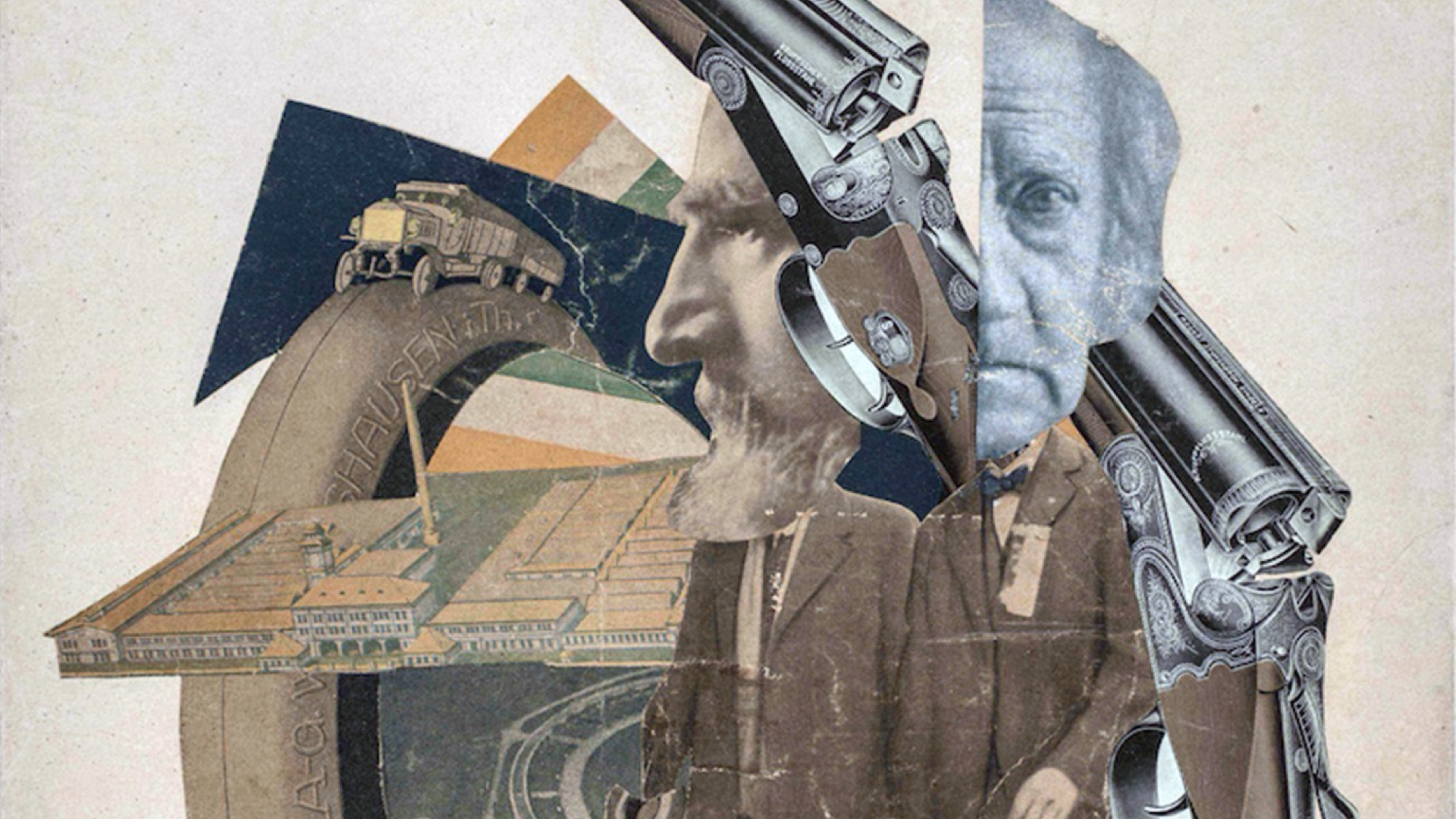
Time to Exit the Monoculture, Daniel
As Spotify strive to increase shareholder value, we need to remind ourselves that we have seen this before. As with IKEA and H&M, they are striving for monopoly or at least global domination. Doesn't it feel a bit outdated? I wrote an open letter to Daniel Ek, and am still waiting for a reply.
After a rather civil debate in Musikindustrin—a Swedish trade publication—where Karin Inde from the Swedish Musicians’ Union responded to researcher Daniel Johansson, I was struck by how familiar the arguments sounded. Johansson had written a somewhat polemical column, explaining that in his teaching he uses a book by Bobby Borg which “converts the word artist into company or service, fans into customers, other artists into competitors, and songs into products.”
Johansson went on to write: “Spotify is not a cultural institution. It is a profit-driven, publicly traded tech company that primarily operates according to market-economic mechanisms. Customers first. Whatever the market wants, it should have.” Reading this threw me back in time and I realised that nothing has changed since the days before streaming entered music.
“Whatever the market wants, it should have” may be true—in ordinary industries. But it is a hopelessly oversimplified view of how music companies should compete in 2025. Spotify does not operate in an ordinary market, but in one where every consumer is also a potential producer. Their efficiency as a company depends on how well they balance those two. And beyond that, they are working with culture—whatever Borg or Johansson prefer to call it. In practice, Spotify is a commercial cultural institution. They do not play by the same simplified rules as ordinary tech companies.
Reflecting on this, I realized that Spotify has fallen into what I’d call the Swedish monoculture trap. It is a very specific trap, shaped by Sweden’s Folkhemmetwelfare state, as well as by IKEA, and by H&M, which trained us to believe that anything not embraced by a majority of the population cannot claim to be democratic. But this is in fact a deeply conservative way of looking at trade—one that, in practice, leads to cultural stagnation, especially in a globalised world.
All of this stems from Spotify’s conviction that its success rests on this outdated Swedish monoculture philosophy, and thus its belief that the neoliberal trope of “always strive for monopoly” will hold forever. It won’t. And no one needs to hear this more right now than Daniel Ek.
An open letter to Daniel Ek, Spotify’s founder and owner:
It’s Time to Exit, Daniel!
I know I spend a disproportionate amount of time thinking about you. More specifically, you and your company. But I’ve decided to stop, which is why I’m writing this open letter hoping it can become a kind of catharsis. My worries about Spotifys development worsened when you removed the “label:” search function and I realised you had cut off every single path to new music that wasn’t totally controlled by the platform. Since then my main concern is the fact that you were given such enormous power over music by not caring about its future.
Just like you, I grew up in a suburb of Stockholm. But unlike you I remember a time when buying records was affordable. In your teens, the labels forced album prices way up to over 20 USD in your teens. Maybe you got frustrated? If you did, I understand completely. My solution was piracy—file sharing—which I considered samples rather than replacement, especially since I continued spending my money on music anyway. It was the industry’s greed that made us steal music—but it also inspired some of us to start making our own. I’m thinking you can understand, maybe even appreciate, that kind of cool and rebellious DIY chain reaction?
At the center of music-making back then, though, weren’t computers but the public music schools and community study groups (“studiecirklar”). I never doubted their existence, as they had always been there when we needed them. A part of Sweden. Those inclined was organically drawn toward artistic work, with an attitude of “if you want to, you can.” Maybe you remember this as well? Of course, building a career required talent and hard work then as well, but the basic instinct was to show the world your thing and hope people wanted it. It was “indie” in the true sense of the word—don’t let anyone tell you it’s only a style. Passionate labels marketed music downstream from the creators: they amplified the artist’s vision and measured impact, airplay, and sales after release. Sadly, some of those are the ones who’ve struggled since you came along.
New business, same monoculture
You did for music what IKEA and H&M did for furniture and clothes: pushed prices so far you won the race. As welfare-state-globalists you had a unique understanding of how to dominate markets through new distribution and retain customers with huge catalogs of »choice«. But most importantly, you knew that low price always beat quality and differentiation – if you’re just the right amount of meh.
I understand that you are offering every single creator and label all the data in the world. Right? Level the playing field, and that. But it’s the data that is drowning out some of the great, society-shaping art with a flood of mediocrity. “If I had asked people what they wanted, they would have said faster horses,” management consultants favourite made-up Henry Ford quote. Market adaptation drives music toward faster horses. It only serves opportunists. And the crucial thing for you to understand—now that you yourself can’t really be called an opportunist—is that algorithmic steering won’t serve Spotify in the long term, either.
Avoiding being a sellout was utterly important in the ’90s—maybe too important—but the claim to authenticity, creating for yourself and your little subculture, put Swedish music on the map. Which, in turn, secured you the meetings you needed to get started. But when the Swedish media started embracing being sellout when their new overlords demanded more ad revenue, leading to a barrage of Idol, Talent and Eurovision coverage, with a launch of the rock star entrepreneur as a bonus. Perfect for you!
All the Stars Aligned
And then you were handed a financial crisis like some kind of gift from the entrepreneur gods! Music consumers saw Spotify as a saviour exactly at the moment when belts were being tightened, and with Swedes’ natural pull toward monoculture, your conditions were even better. So good, in fact, that you got former the former prime minister #backaspotify, giving Swedes the impression that a distribution platform owned by Cypriot holding companies somehow was of national concern. In fact, so much that the Swedish Institute invited you to help manage Sweden’s global image.
Your greatest skill, though, was exploiting the hubris of the Swedish music industry. The years prior, it had just gone all in on the PR-concept of the Swedish “music miracle”, convincing everyone that higher powers carries the costs of music—not creators or even the public. You realised that if everyone believed entrepreneurs created a global demand for Swedish music, you’d get a sweet deal from the industry players.
When you—at just the right moment—proved to Universal that Tokio Hotel or My Chemical Romance had been downloaded a million times, it fit perfectly with that self-image. The music itself hade been devalued. A stroke of genius. They knew that the trucks hauling plastic discs to empty megastores weren’t the future, but they didn’t know where the internet was headed. Not as well as you did. You where in immediate agreement about where music’s monetary value belong: with those who understand economies of scale and not those who understand music. Sweden—broadband in every home, cost-efficient music export and politics that wouldn’t interfere—would come to validate your dream: music was ripe for total commodification.
Twenty years later, I worry about what kind of world you want to build though.
You probably know that many music creators raged over your investment in Hellsing. Quite easy to see why, I guess, but my main takeaway was that it highlighted cultures lack of understanding of capital. They don’t seem to grasp the basic premise that you guys funnel the money you earn in one company to another that earn you even more. That the other companies aren’t music schools or museums doesn’t exactly surprise me – “at least 10x return or it’s not worth it,” or whatever you guys usually say? Still, it would be good for your reputation to give back—maybe just a few hundred million a year—to nurture Swedish music’s ecosystem. Since you’ve said that the cost of creating content is near zero, though, maybe you don’t feel you owe anything to either music or Sweden.
Gamble Without Losing
A thing you may not have considered though, is that when creators don’t earn an income from music, they do other work to survive. Nothing wrong with that of course, but what it means is that society at large carries a share of your billions in profit. That’s why we pay taxes—even your Moderate Party-partner agrees with that. When you invest your Spotify profits in defense tech, private healthcare, steel, and mining, but not in culture, it sends a message to creators. Art investments may be pure cost and even never pay off—but isn’t that a bit thrilling? They’re supposed to be. Uncertain but exciting, and if you give to something you love already, you win even if you lose.
You financed a conference, a tried-and-tested strategy. And I know it’s hard to do everything right when half the world complains no matter what you do—but you could do far more than renting the Grand Hôtel and flying in Obama and Greta to talk about the soft power buzzwords of the day.
You say you want to “eliminate all middlemen.” I get that it may just be a sales pitch. But still: lone, tech-savvy “artists” AI-cloning music at subsistence level isn’t the future, Daniel. It just isn’t. And by the way—isn’t Spotify itself a middleman?
I’ll stop here. I will always hope that you stop listening to data analysts, even though they’ve made you so inanely rich. It’s time to leave the singular and boring monoculture behind and embrace diversity and healthy competition— music will move on with or without you. I suggest you read the interview with William Burroughs in The Job from 1966, where he was asked what the ’money machine’ eats. His answer could just as well have been about AI today: “It eats quality and shits out quantity.”◼
Sincerely,
Mathias Strömberg
Of some iterest
- Sweden's Cool Sweden-event at Midem, Cannes 1999
- Spotify in The Swedish Institutes National Image for The Swedish Image.
- A.K. Klosowski & Pyrolator Home Taping is Killing Music