



Time for money 1: Art and Resistance in Technopopulist Paradise
The music industry is a bridge between art and commerce, culture and enterprise. It has its problems, but it overcomes them by remembering that technology and politics are the rails, not the train. "Time for Money is" a series about how Sweden’s music industry manages to create sustainable culture—while also needing ever more perspective to counter systems that were never designed to serve art’s purposes.
Few would argue with the idea that Sweden’s musical success—both commercial and artistic—comes down to quality. Most people also know that quality takes time, and that time is money. To stimulate prosperous arts is about increasing creators’ resources so they can buy the time needed to raise their ambitions.
Both the state and the private sector provide those resources, but as long as Swedish politicians fail to grasp the role art plays in building society, the public track remains narrow. The cashflow thus comes from businesses, who naturally prefers investments that can be recouped in a calculable future. The political pitch is that if business supports the arts via a kind of trickle-down at an individual artist level, money will be generated that then funds their ambitious art. In other words: every creator should run their own ”Future Lab” and keep churning out products for the market.
But just as trickle-down doesn’t work at a systems level, which has been long established, and a major reason Sweden is Europe’s most unequal country, it doesn’t work at the individual level. Culture reflects society at large, which is why Sweden’s average cultural worker is among the poorest in Europe relative to our wealth. The feeling that prevails on a societal level though, is that creators are doing just fine is nonetheless, as there are some remarkable exceptions that shape public opinion. And Swedish music has many of those exceptions, which makes it a great arena for financial speculation, but is also produce lessons for creators in other fields.
Sweden has become a paradise for technopopulists because our politicians love tech with export potential. This populism has become central to how the music industry is being showcased as proof that “culture” can be profitable. The political analysis of what actually drives that profitability is far too shallow though, and requires a lot more understanding the conditions for quality music, not just hard data. The fact that ABBA Voyage London draws a million visitors a year or that Spotify is nearing a billion users doesn’t make Swedish music creators even a pinch richer. This complexity creates both opportunities and challenges—ones Swedish music companies can, objectively, be said to be world-class at exploiting and tackling for the last 25 years or so.
The systems are integrated though: music doesn’t act in a vacuum. It is utterly dependant on the cultural sector in the broadest sense but also on society at large, nationally and globally. And because various fields of culture’s investment horizons and returns differ sharply, cross-field comparisons are inherently unfair. Still, culture can learn from music’s more serious actors, who always navigate and speak so that politicians and capital can understand. The message is simple:
Since time is money, artists are venture capitalists.
In a series of articles I will explore how Swedish music creators and companies organically build sustainable business models in constant resonance with the world around them.
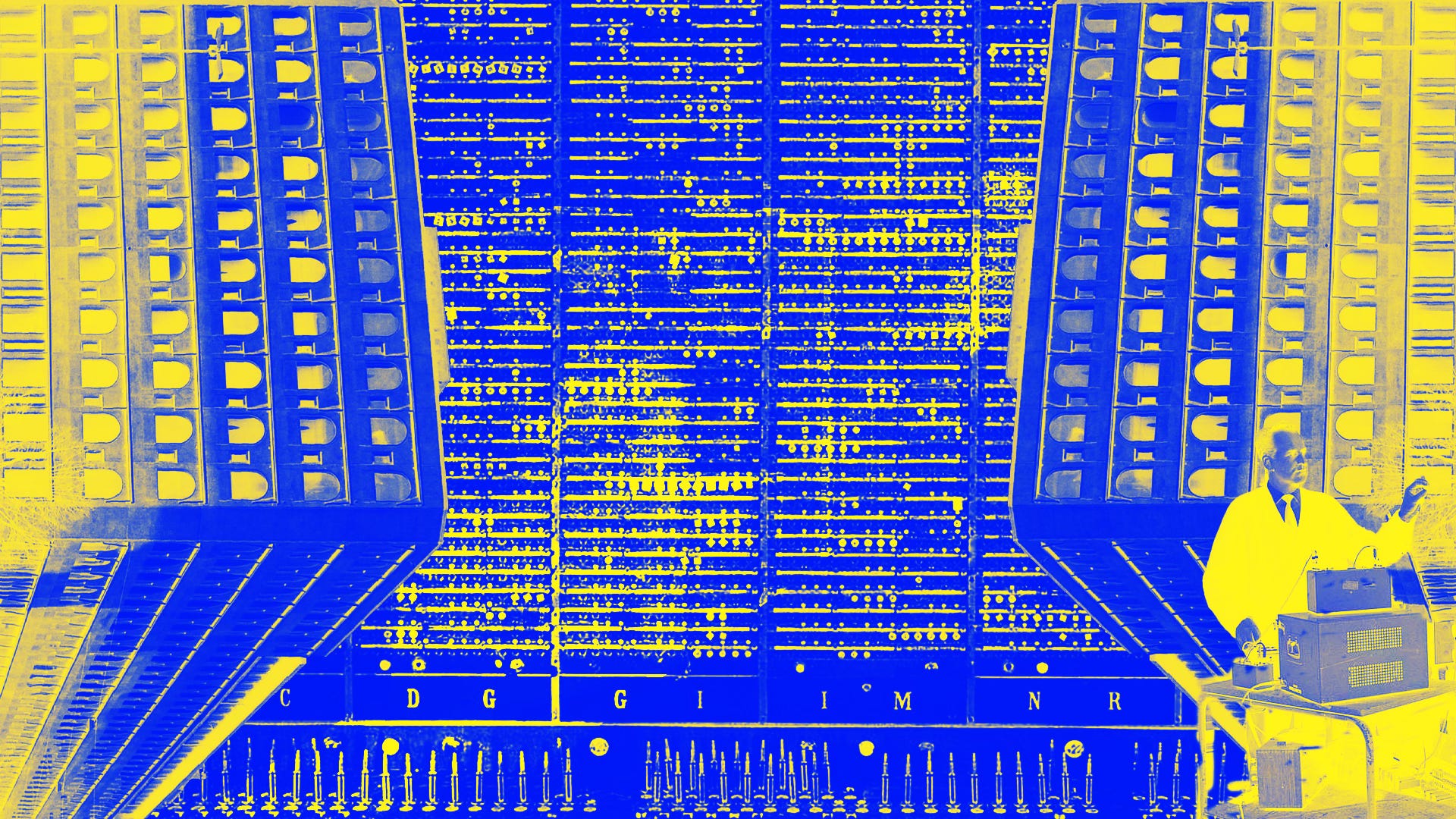
1: Art and Resistance in Technopopulist Paradise
The owners of music industries are further away from the music itself, which hurts artistic risk-taking. New technology is said to fix the problem but mostly creates new revenue streams for investors. Swedish music creators are inventive, though, and keep hacking the very systems designed to exploit them. Thank god—if the system’s owners had their way, every artist would be working at a digital assembly line in the global content factory.
As long as there is a future, musicians will play and music lovers will listen, which makes music rights attractive even to investors completely uninterested in art or culture. Digitalization has flung capital’s eyes wide open to music’s enduring value, and anyone who has questioned the power shift or the speculative core in Sweden was distracted with a file-sharing debate and labeled non-progressive. We were told that the money has to flow freely and unregulated—otherwise music loses. But music’s custodians knows better than to take such promises at face value after the last few decades of total market upheaval. The music industry’s heart has always been a gig economy that nourishes purpose-driven companies and musicians who aren’t for sale. Hard to manipulate—as long as its non-profit institutions stay strong.
In recent decades, the music industry has been flooded with capital from those who can afford to play the markets. It’s impossible to tally what kind of money music generates or even map who owns what, but it’s safe to say most commercial sectors—from brewers of watery concert beer to impersonal fashion chains—owe a slice of their success to skilled music creators. As a whole, music is exceptionally good at making that influence pay—far more than almost any other art field, at least.
A potential mass audience is always around the corner for music, whether you’re making narrow ambient or chasing viral hits. That was true long before the internet, which is why even in gloomy, inflationary times it still makes sense to keep a flame of artistic hope alive for music creators.
Choice = democracy?
Culture’s biggest problem is easy to point out: it has never been easier to imitate whatever “works”, which leads to floods of unambitious trash in every channel. Those who actually deserve to break through the digital noise drowns, disrupted by algorithmic frequencies powered by capital maximisation. When innovative music eventually finds a wide audience it silences all claims that taste is subjective and proves that some art is more deserving of success than other. That’s what makes culture wonderful. (We’ll leave the budget and marketing conversation for another day.)
You can trace the trash back to technopopulism—a populism that presents as innovation and excuses pushing for volumes with a dim “everyone’s entitled to their taste” narrative. In the platform era, we are not to question opinion on quality as it threatens the model. On a moral-philosophical level, it becomes impossible to “prove” that Spotify worsens music overall or that AI-generated songs should be valued a lot lower—without stepping into a debate about inclusion. For technopopulists, critique is elitist and unlimited choice—i.e., volume—is what “the people” want.
A broad embrace of free speech and culture’s intrinsic value thus ends up enabling the spread of algorithm-optimized, AI-generated, market-tuned trash by insisting it must be valued as serious art. That’s untenable; the trash belongs in the bin. Still, technopopulist vultures will circle music as long as there’s money to siphon from the system. And music creators with understanding of how the system operates doesn’t take their eyes off those vultures—a standoff has produced a kind of cultural MAD.
We were told the industry would get better for creators once technology “democratized” music. Today we know democratization is just a word to technopopulists. Like “equality” and “diversity,” no one argues against a democratic project without very solid footing. These words exist to create a sense of inevitability—question a “democratic” business model and you’re questioning the social order itself. But the people who have taken (and keep taking) the real risks—the backbone of music—have a finely tuned BS radar. They’ve heard all the promises before and know how to navigate the present. That BS radar, built on a fine blend of purpose and business reality, has always been music’s salvation.
A fragile self-rule
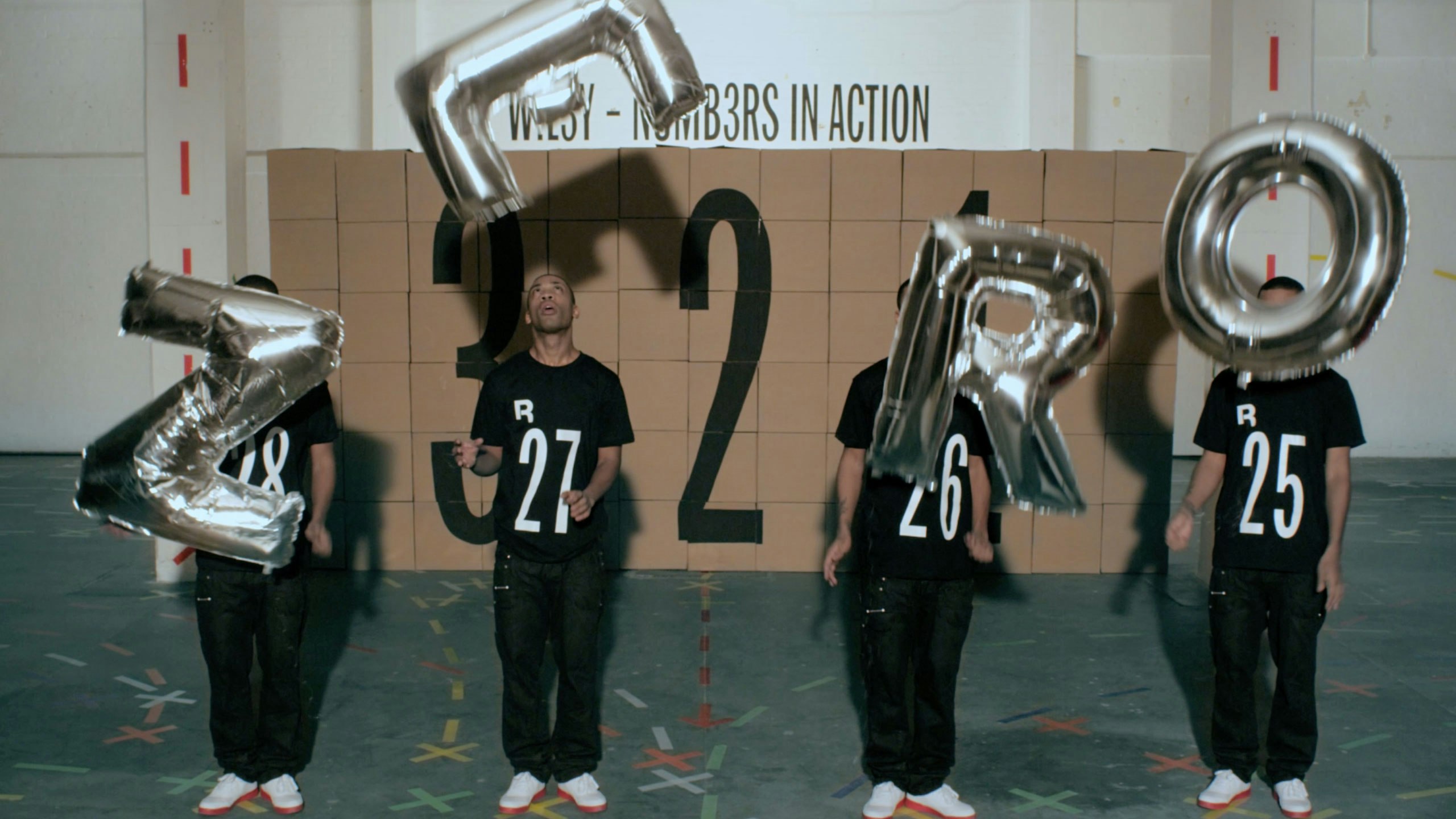
In 2007 the British grime artist Wiley released 50/50, rapping about his new deal with the label Big Dada; three years later he gave away 203 tracks on Twitter; a year after that he asked for more cash in Numbers in Action from the album 100% Publishing. The boasts are playful and maybe three-star, but they capture a moment when the value of copyright changed at the core. Spotify was born in between those releases, and like many others, Wiley demanded control of his rights because—even with packed concert rooms—the cash flow seemed to have evaporated from copyrights. The seemingly positive shift created a new challenge once rights became easy-to-trade derivatives: the music industry changed shape as it was subordinated to the financial markets. Unlike other global industries, though, music is built on atomization—singular individuals’ talents uphold the whole market.
That atomization is both the industry’s strength and its Achilles’ heel: a consumer market where billions of individuals consume millions of individual expressions whose point is to explore art with a Big-Bang energy that can’t be pointed at a single target.
“The ceaseless search for new markets, new products, new technologies, and new fields of investment is the system’s very motor.”
—David Harvey, 2005
In this brave new world, serious, ambitious music companies remain artists’ most important partners. Taste and integrity are having a renaissance grounded in purpose-driven, focused DIY that insists on being both artistically and economically sustainable—fully deserving of the soft money the public sector can provide.
The era of conscienceless Bosses burning out artists to maximize ROI may not be over, but it is definitely being renegotiated. Sweden is at the forefront of that renegotiation, which gives us a steady stream of music that defines the future instead of merely reflecting the present.
Songs like Civil Polis’ New Music Friday. ◾
Part 2 of “Time for Money” is about music’s new feudal lords. Send an email to uppdateringar@systemfiler.se to get notifications starting with the next piece.